Featured

An Introduction to the Digital Marketing World

Welcome in joining me to venture into the Digital Marketing World through the lens of a millennial in Singapore. The Digital World is not something new to the Millennials and Gen Z generation.

Source: http://cinemagraphs.com/

I am part of the generation that has seen the transition from Traditional Offline Marketing to Digital Marketing. We used to walk down walls with printed advertisement on bus shelters’ and read them on the printed newspapers. In the present age, the world has gone digital. Walking down bus shelters with digitalised, moving, incredibly interactive and eye-catching advertisements has become a norm. This is the Digital Age we are living in. As the world changes, marketing has to change.

What is Digital Marketing?

We are all guilty of closing advertisements or campaigns sites and pop ups online. There wouldn’t be a day we would not see them popping out. I remember asking myself “Why are they there?”. Almost immediately, my brain replied “Marketing needs an audience. They are there because, WE ARE THERE.” So, what is Digital Marketing?

DIGITAL MARKETING

Definition: The use of Information Communication Technologies (ICT) to understand, create, communicate and deliver value to customers and the organisation.

— Wags, 2014

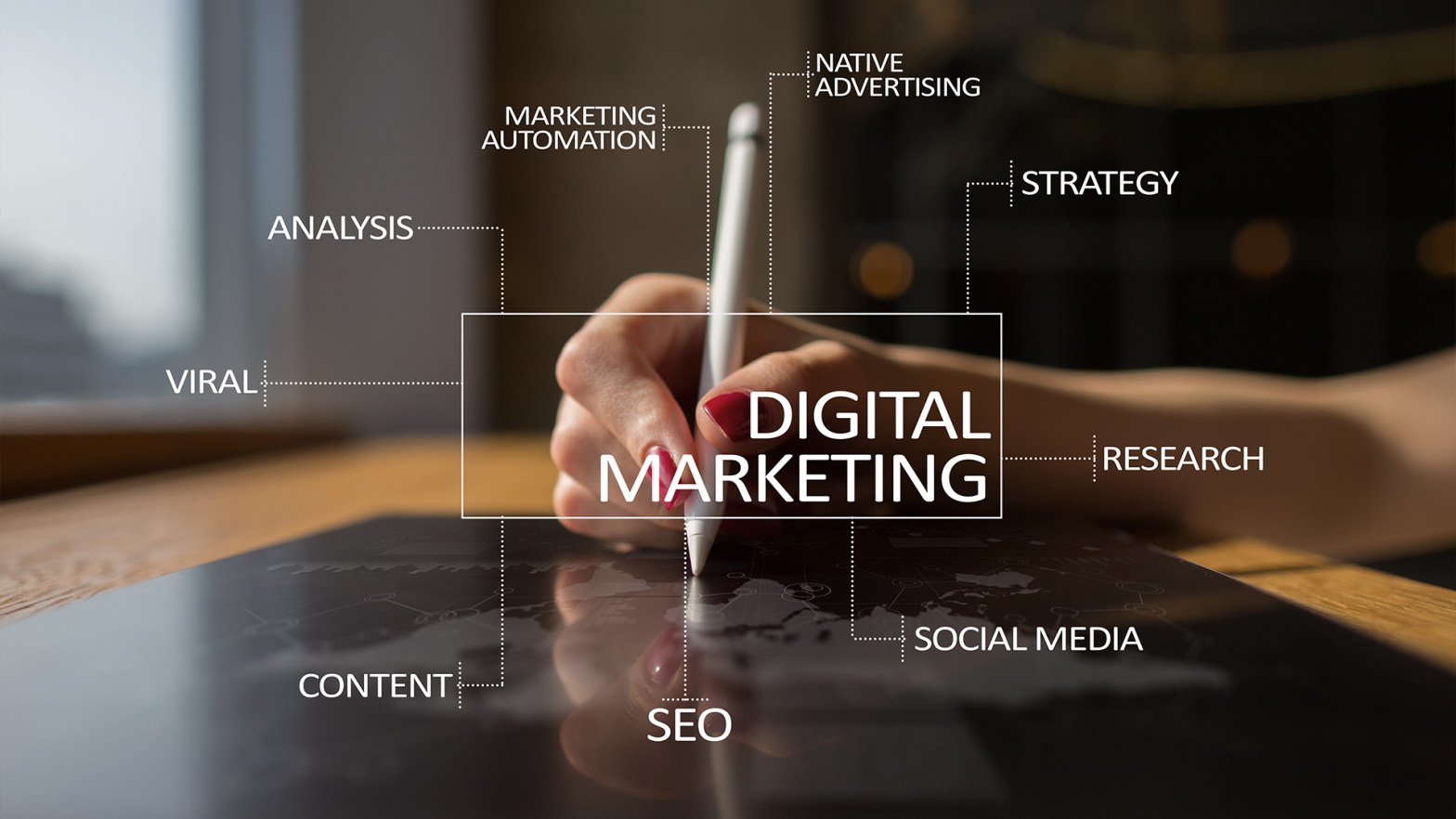
The above definition of Digital Marketing in Singaporean Millennial’s layman term is also: “To Market Digitally.”  When thinking of Digital Marketing, we think of advertising through digital channels such as search engines, websites, social media, email, and mobile apps. While this term covers a wide range of marketing activities, the following are some of the examples of digital marketing:

Digital Marketing Examples

According to Lucy Alexander, a blogger who also works with HubSpot’s Acquisition Marketing team on content creation and optimization testing, gave a list of the examples of Digital Marketing. Let’s look at the list she gave:

  1. Search Engine Optimization (SEO)
  2. Content Marketing
  3. Social Media Marketing
  4. Pay Per Click (PPC)
  5. Affiliate Marketing
  6. Native Advertising
  7. Marketing Automation
  8. Email Marketing
  9. Online PR
  10. Inbound Marketing

The examples above may look chim (difficult to understand), however fret not! In my following posts, I am going to elaborate on the range of topics revolving Social Media Marketing, Mobile Marketing, and the Internet of Things. As we venture into these, I hope that we become better-informed about the types of digital marketing tools and platforms available, and how to be a highly effective user of digital marketing. Stay tuned!

Source: https://blog.flixel.com/5-ways-to-use-cinemagraphs-in-digital-marketing-campaigns/

Impacts of Digital Marketing

Positive Impacts:

Let’s start right here: How does digital marketing benefits us? Why should marketing go digital? We can use the 4Ps of marketing to categorize the advantages of going digital:

Product
• Customers can mass customize products
• Companies can conveniently present their products, giving customers a digital experience

Price
• Customers can compare prices more readily
• Low Cost for Companies

Distribution (Place)
• Increased efficiency of distribution due to less paper work as process of orders are sent immediately to Companies’ system instead of going through physical stores
• Quick to reach out to wider range of Customers audience

Promotion
• Rapid dissemination of information
• More options to promote products through online platforms
• Better interaction with Customers

In companies, brand awareness campaigns and sales advertisements are commonly found on Instagram and YouTube Advertisement Platforms. As individuals, we use Linkedin for Self-branding and it is more effective and efficient than just mass-sending resumes via emails or making calls for a job hunt. I have received 10 job offers so far by just creating a Linkedin account 1 year ago!

Negative Impacts:

While going digital is important for current marketers, What are the negative impacts it has on this generation? Similarly, we will be using the 4Ps of marketing to categorize the disadvantages of going digital:

Product
• Customers may get unfitting or unsatisfied products
• Companies can experience more products returns and exchange

Price
• Customers may experience transactional issues
• Higher training costs for companies to train employees to go digitalize in wide corporate scale

Distribution (Place)
• Increased admin works with wrong and changing orders
• Customers unable to have physical experience to try the products due to absence of physical stores

Promotion
• More admin work for online interactive campaigns
Source: https://blog.flixel.com/best-5-apps-make-beautiful-cinemagraphs-android-ios/

Final Thoughts

Today, Digital Marketing plays a significant role in current marketing industry. According to Pew Research, the number of people going online every day on a constant basis is still increasing. As such, even with the cons of Digital Marketing, the buying behavior of shoppers has already changed along with Digital Age. Traditional Offline Marketing is no longer as effective as it used to be.

While the constant advertisements popping up can be unnerving, Digital Marketing is no doubt the fruit of the revolution that Digital Age brought. Understanding Digital marketing enables us to become wiser users and be a better communicator with one another in this evolving digital reality world.

Today, I want to encourage you to think back on your life and wonder how Digital Marketing has been relevant and useful in your life. In what ways would you like to benefit from Digital Marketing and future blog posts? I’d love to hear from you in the comments!

Additional Resources

FRONTLINE journalism has created a program that discussed how marketers are converting social media “likes” into big dollars, how teenagers’ identity has been affected by internet, and the possible ramifications for “Generation Like.”. This video is definitely worth watching!

Digital Media in Integrated Marketing Communications

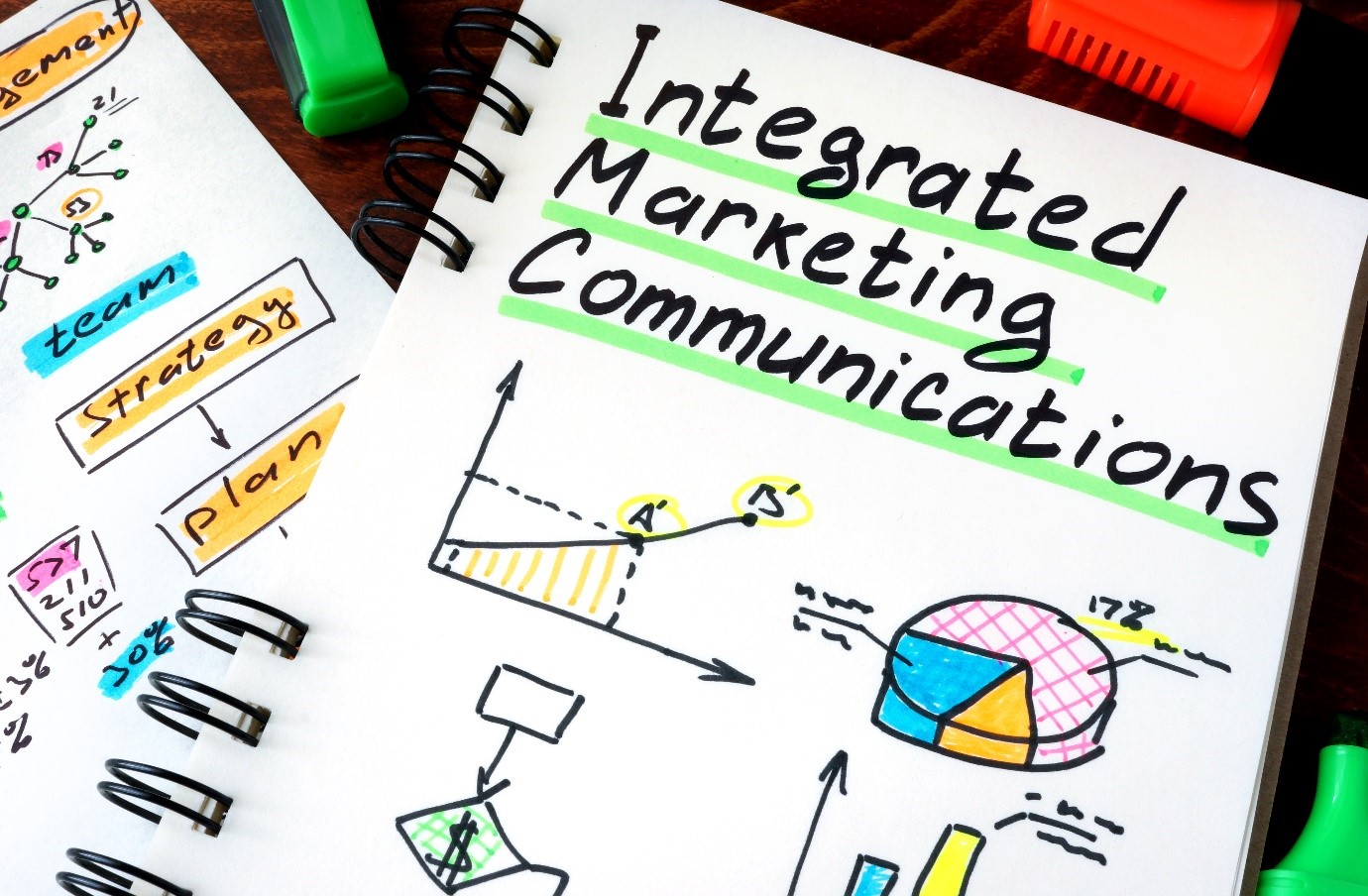
Integrated Marketing Communications, also known as IMC, is not something new to marketers. If you’re new to this, below is the quick definition:

Integrated Marketing Communications Definition

It is a process for managing the customer relationships that drive brand value.

Duncan T. (2002). IMC. Using Advertising and Promotion to Build Brands (International Edition), Mc. Graw Hill, New York, 2002, p. 8.

It basically means IMC integrate the promotional tools so that they can work together in harmony. Note that Promotion is one of the 4Ps of the marketing mix. Promotions has its own mix of communications tools, which work better if they come together in harmony instead on working on its own.

Traditional marketing uses different campaigns as separate marketing streams (press release, advertisng, direct marketing and sales promotions etc). With IMC, it ensures that all these streams come together to form one big marketing machine, working together in harmony.

Source: https://www.cio.com/article/2377257/online-marketing-7-ways-to-create-a-successful-integrated-marketing-campaign.html

Digital Communications Rising in IMC

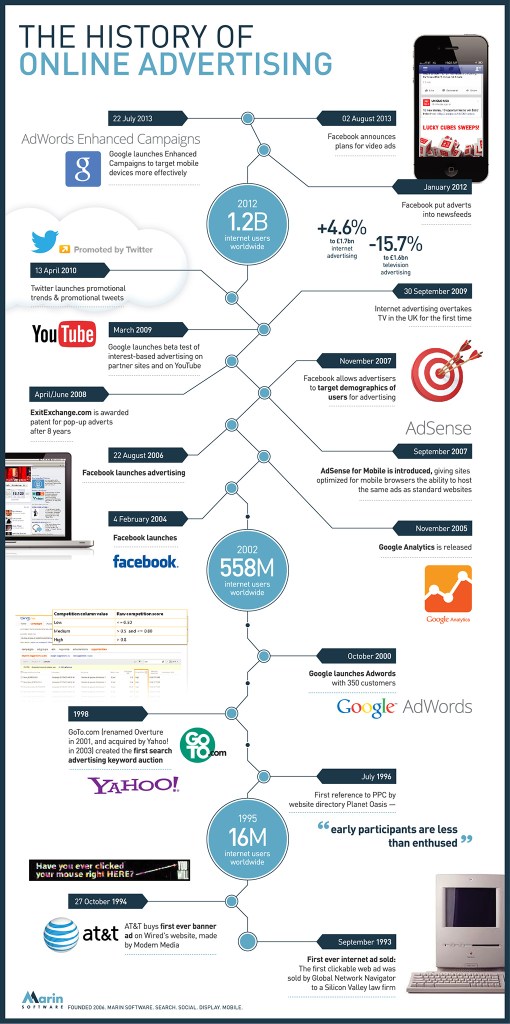
If you have been reading my previous blogs, you would have noticed the increased amount of internet users. Otherwise, you can look at the statistic below and observe the trend of digital internet users online. It has been increasing over the years and will only keep increasing. Hence from traditional media streams, marketers have to involve digital streams of communications into IMC as a whole.

Source: http://cdn.marketingmag.com.au/wp-content/uploads/2013/10/History-of-Online-Advertising-small.jpg

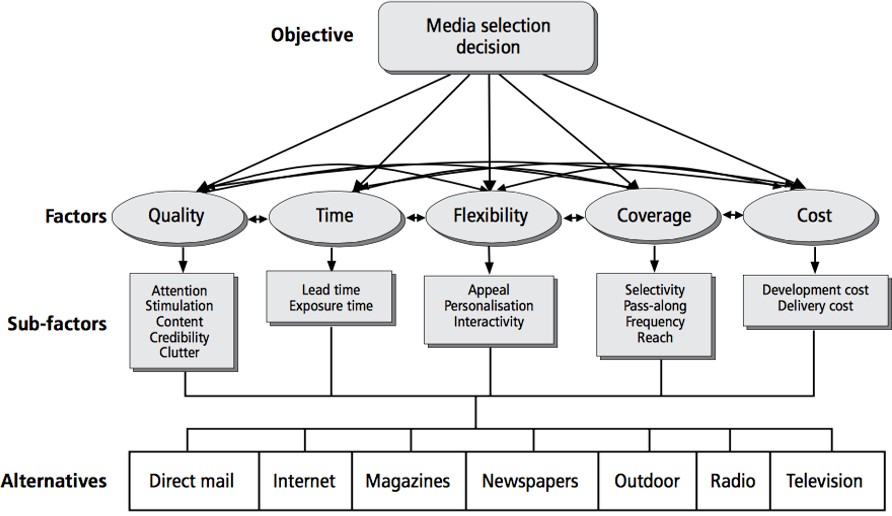
According to Coulter & Starkis (Coulter & Starkis 2005), the factors for media selection includes quality, time, flexibility, coverage and costs. The table below provides guidance and serves as a useful tool for marketers to look at when matching its marketing objective to the types of campaigns they want to have according to the factors in consideration while coming up with marketing strategies.

Source: Coulter & Starkis (2005). “Development of media selection model using the analytic network process. International Journal of Advertising, 24(2). (page 200)

Under Alternatives of communications available, now marketers have to consider digital communications available such as Google Ads, Facebook, Twitter, Instagram or App.

How to Integrate Digital Communications into IMC?

According to Pickton & Broderick (Pickton & Broderick 2001), digital media will be more effective when used as part of an integrated approach in areas such as :

  • Coherence: different communications are logically connected.
  • Consistency: multiple messages support and reinforce, and are not contradictory
  • Continuity: Communications are connected and consistent through time
  • Complementary: synergistic, sum of parts is greater than the whole

Steps to Create Successful Integrated Marketing Campaign:

1. Have a clear understanding of who your target audience is.

  • Who are your target customers?
  • What are their motivations?
  • How do they like being communicated to?
  • Which newspapers or magazines do they read and which sites do they visit regularly?
  • Which channels are they using?
  • If they’re using social media, what are they talking about?

2. Pick your channels.

  • Which channels do my customers use?
  • What are the channels’ strengths and weaknesses?
  • How will they help me reach my business objectives?

3. Have a consistent look.

  • This ensures consistent visual identity which boost familiarity that audience will catch the company as quickly they see the campaigns.

4. Create clear, consistent content that can easily be adapted or repurposed to suit different media or channels.

  • Communications [i.e., messaging and offers] must be clear [not filled with confusing in words/phrases],
  • Compelling (interesting and/or topical to the receiver)
  • Consistent (regardless of channel — Web, phone, in-store, mobile)

5. Ensure that your messaging is integrated.

  • Make sure each element of your marketing campaign “is set up to drive traffic to your ultimate target”, this means includes links for sharing, press releases, and connecting or directing to online shop, depending what target the company wants.

6. Make sure your marketing teams/agencies are working in sync.

  • Lauren Witte, associate director of Marketing at law firm JacksonWhite, P.C says “If you have multiple members of a team working on disparate projects within the same integrated marketing campaign, facilitate team meetings to ensure all members are on the same page, the message behind the campaign is consistent and to manage company brand standards across the campaign,”.
  • This is to ensure overall company branding is consistent look and feel across the channels and campaigns.

7. Don’t forget to track your campaigns – and coupons..

  • Dylan Whitman, cofounder, Brand Value Accelerator, a digital marketing agency, mentioned that tracking allows proper system in place to understand if the marketing is achieving conversions and results. It also allows company to receive data back from retailers via barcodes and coupon clearing houses about which corresponding campaign segments are performing best from an ROI standpoint.

Final Thoughts

In conclusion, having Digital Media Communications and Channels in IMC is inevitable in this Web 2.0 era. With new 5G technology, marketers have to find new ways to improve and strategize to integrate and promptly update its marketing campaigns as a whole to keep up with the fast technology and customer behavior changes. After reading this post, have you seen a good example of Digital Media Communication being integrated into IMC? I’d love to hear from you in the comments!

How to Use IoT in Marketing?

The “Internet of Things”, IoT, is a topic every marketer talks about. 51% of the world’s top global marketers expect IoT will revolutionize the marketing landscape by 2020.

Internet of Things Definition

The pervasive presence of a variety of devices – such as sensors, actuators, and mobile phones – which, through unique addressing schemes, are able to interact and cooperate with each other to reach common goals.

Peter M. (2017). Embedded System Design: Embedded Systems Foundations of Cyber-Physical Systems, and the Internet of Things . Springer, P3

The definition above is based on IT sector, so what does IoT mean to marketers? These smart, connected devices are emerging in this era for marketing. It provides endless opportunities for marketers and advertisers to listen and respond to the consumers’ behavior.

What’s more? This generation is eager to improve their lives with these smart devices and provide marketers with information for more personalized communications, hence providing opportunities for real-time, immediate engagement and more efficient customer service.

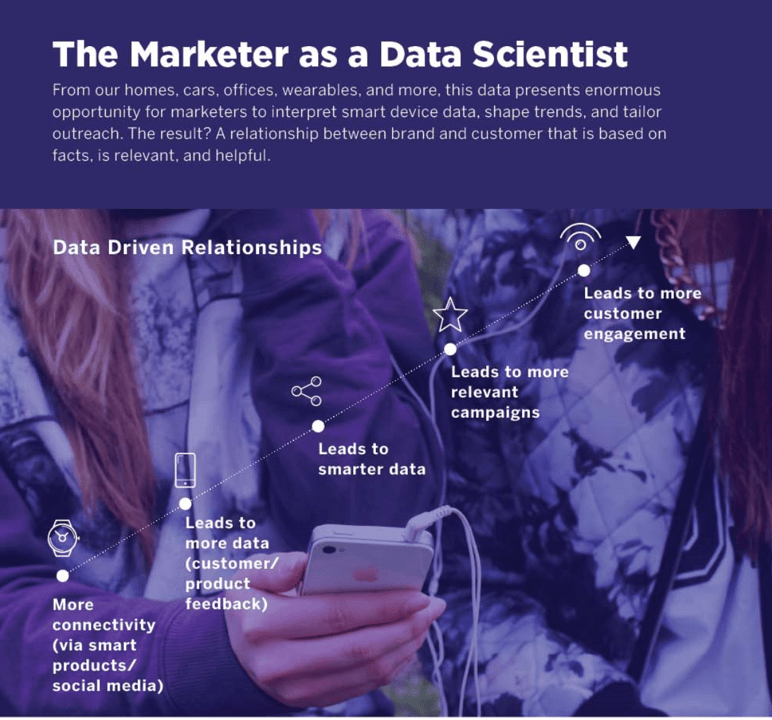
Source: https://blog.marketo.com/2015/04/infographic-the-marketing-power-of-the-internet-of-things-connectivity-for-better-customer-interactivity.html

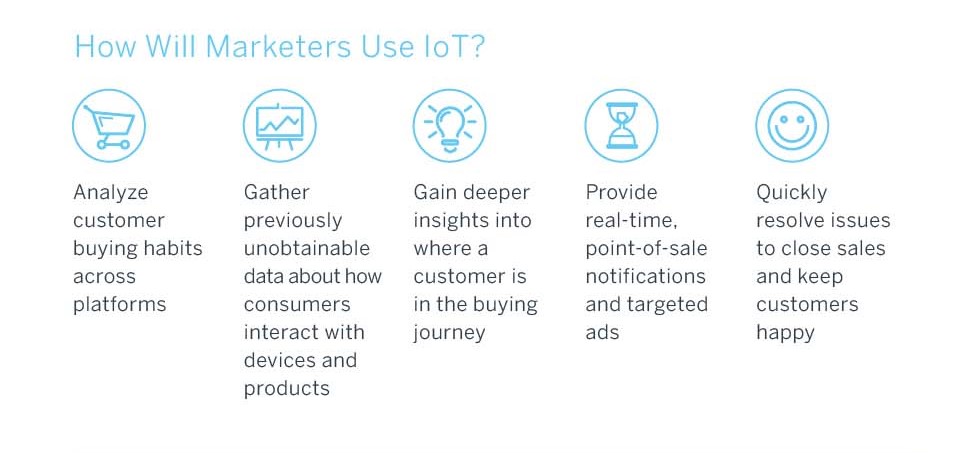
With IoT, marketers also becomes Data Scientist. As shown in the picture above, IoT enables a more effective and quick collection of data process, ensuring marketing becomes more relevant and engaging. IoT is invading the world, advancing in quick speed, hence marketers have to understand how can they use IoT in their campaigns.

Source: https://www.techcircle.in/2018/05/04/dell-microsoft-team-up-to-simplify-deployment-of-iot-solutions/

How can Marketers use IoT?

According to Dayna Rothman, Director of Content Marketing at Everstring and previously led content for Marketo, Marketers can use IOT the following ways:

Source: https://blog.marketo.com/2015/04/infographic-the-marketing-power-of-the-internet-of-things-connectivity-for-better-customer-interactivity.html

Recently I have bought a pair of Addidas Shoes, above has its series and also QR Code for Spotify Song Playlist when running. I chanced upon the shoes online on Instagram, where it provides detailed description of benefits and values I can gain from buying the product, there were tags attached to show price and as we press on the tags, they direct us to the actual main webpage where we can purchase the shoes. It is so convenient and fast, user-super-friendly. Many other stores that went online has also used subscription options to update consumers through emails or text messages that could be sent to the consumer’s devices. Consumers could also Direct Message them on social media platforms and expect a reply within the day. As I went through the purchasing process, I wondered, how did they know I would press on their Instagram page in the first place? They knew the buying behaviors of consumers now.

This generation is living in an instant gratification world, campaigns becomes conveniently available on devices. The more targeted they get, the more information they have access to about their consumers, the better the marketing outcome.

Final Thoughts

In conclusion, IoT provides endless opportunities for marketing to evolve and reach out to the consumers. Invading devices for marketing becomes extremely crucial, marketers must not missed out this part of marketing and look at the consumer’s point of view to understand the trend of buying behaviors using devices. After reading this post, how do you think you can use IoT in your marketing campaigns? I’d love to hear from you in the comments!

Marketing Going Mobile

This post will discuss Mobile Marketing’s it’s benefits, difference and types of mobile marketing available.

But first, what is Mobile Marketing?

Mobile marketing as any marketing activity conducted through a ubiquitous network to which consumers are constantly connected using a personal mobile device.

Kaplan, Andreas M. (2012). “If you love something, let it go mobile: Mobile marketing
and mobile social media 4×4. Business Horizons, Vol. 55(2), 129-139

Why marketing should target mobile users?

Mobile use is growing faster than all of Google’s internal predictions, with YouTube seeing 200 million mobile playbacks a day.

– CEO Eric Schmidt (2011)

According to the Yellow Social Media Report (2018), more Australians own a smartphone (87%) than a laptop (76%). There are 74% use smartphones to access than that of social media’s (laptops 49%). With such number, more potential reach of consumers are going mobile, hence marketing has to go mobile too.

Source: https://dribbble.com/shots/3648521-Split-Depth-Instagram-Marketing-for-Craft-Beer

How is Mobile Marketing Different?

Do not be mistaken, marketers don’t need a mobile marketing strategy. Rather, their
strategy needs mobile. We will explore strategies mobile marketing offer later.
Now, how is Mobile Marketing Different?

  1. Location of search – Smartphones are used everywhere and mostly over a mobile operator connection, rather than WiFi.
  2. More local intent – Smartphone users more commonly seek location-relevant information, such as nearby store, restaurant, taxi, plumber, directions and local weather.
  3. Time sensitive – Mobile search tends to be more time-sensitive than PC search.
  4. Context – The mobile context drives the person’s motivation for the search and the actions they take following the search.
  5. The device – capabilities – Modern mobile devices, even feature phones, are the ultimate communication and multimedia tool.
  6. The device – limitations – Mobile phones, even smartphones, have limitations. The small size of the screen, lack of physical keyboard, clumsy fingers, battery life, patchy network connections, cost of data, inhospitable locations and problems with multitasking can all contribute to making searching on mobile devices more of a chore than on a desktop or tablet.
  7. Voice search – The limitations of the mobile device and context makes searching on a mobile phone harder than with a PC.
  8. Search by image and visual search – Some search engines also allow users to search by using an image, perhaps a photo snapped of an unknown animal, plant, place or a coveted item of clothing.
  9. Mobile apps – Search engines only index Web content. If your content is only available in a native application, today it is invisible to a search engine.
  10. Attribution and measurement – As explained above, the incredible capabilities of the mobile phone make it the ultimate multi-purpose tool, with all manner of communication, multimedia and navigational capabilities and mobile users will take all manner of positive actions of the back of a mobile search, including purchase. But what if the mobile search results in a purchase offline, in-store or over the phone? A purchase is a purchase – but a problem arises when you are attempting to calculate return on your investment in your mobile-friendly site or mobile advertising expenditure and attempt to correctly apportion future investment.

Mobile and digital have changed consumers’ behavior. Mobile marketing is Personal (devices are seldom shared, we would be uncomfortable to let others take full control of our phones). It is also Interactive, Time relevant and Location independent (Kaplan, 2012). Hence, with a new mode of communication and networking device, marketers have to strategize marketing towards mobile marketing tools that are available. Note that these differences are also pointers that marketers should make full use of while planning their marketing strategies that go mobile.

With that in mind, marketing to go mobile, what are the mobile tools available for marketing?

Types of Mobile Marketing Tools

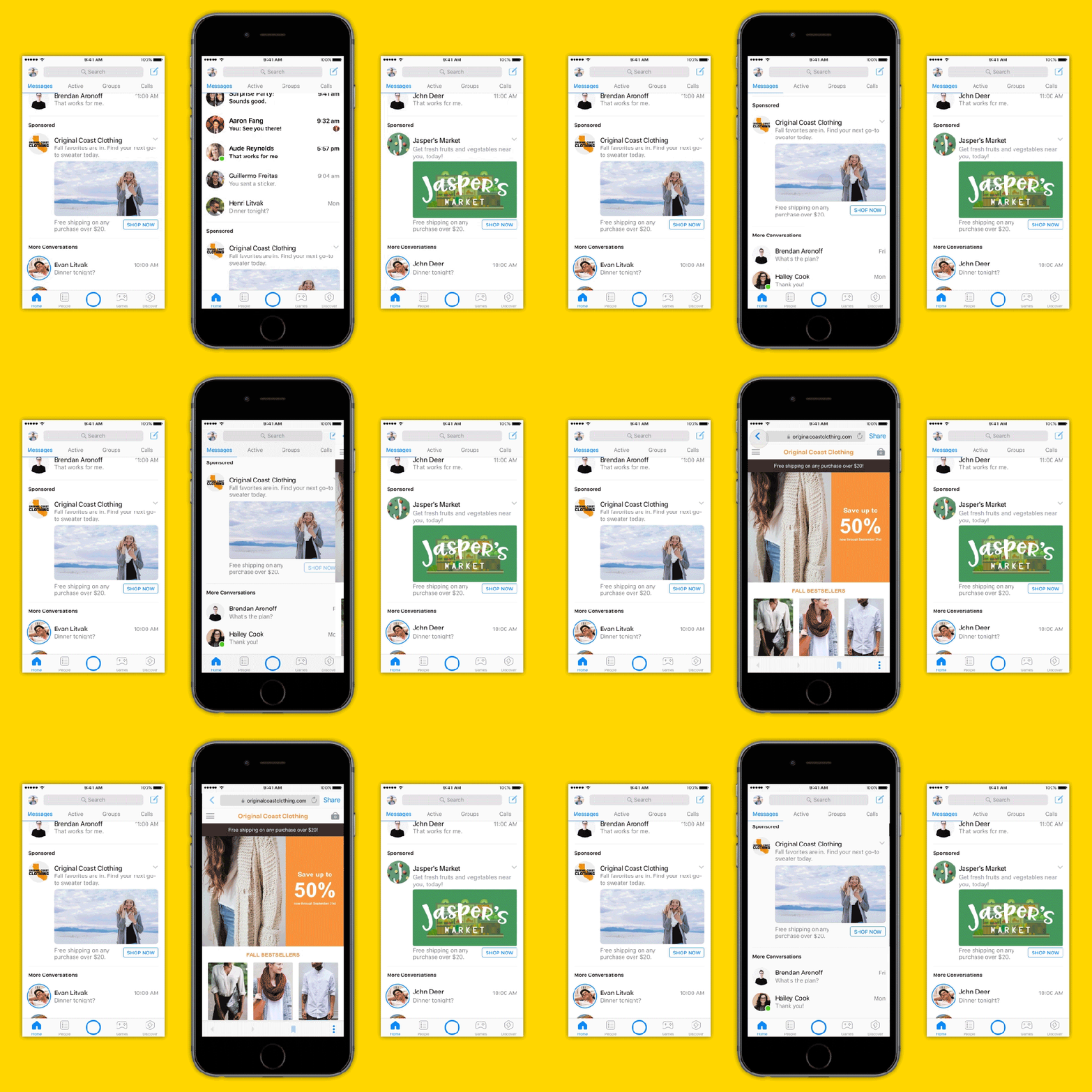
Mobile Ads = Text-based ads, banner advertisements, videos or even as mobile games. Considering the average screen size of mobiles, the advertisements are optimized to fit into a smaller display area. 

Source: https://www.business2community.com/social-media/marketers-get-ready-whatsapp-ads-are-on-the-way-02171780

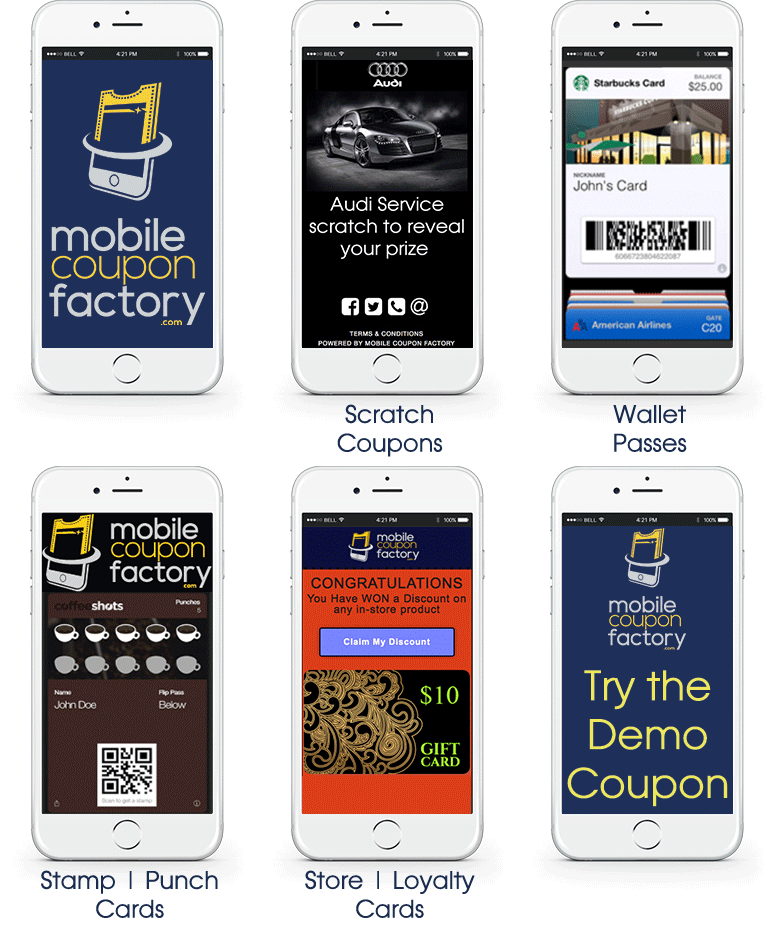
Mobile Coupons = Electronic coupon delivered to a mobile phone, which can be exchanged for a financial discount or rebate when purchasing a product or service. 

Source: https://mobilecouponfactory.com/faq/

Mobile Websites = Browser-based World Wide Web services accessed from handheld mobile devices through a mobile or other wireless network. 

Source: https://seopressor.com/blog/how-to-make-my-website-mobile-friendly/

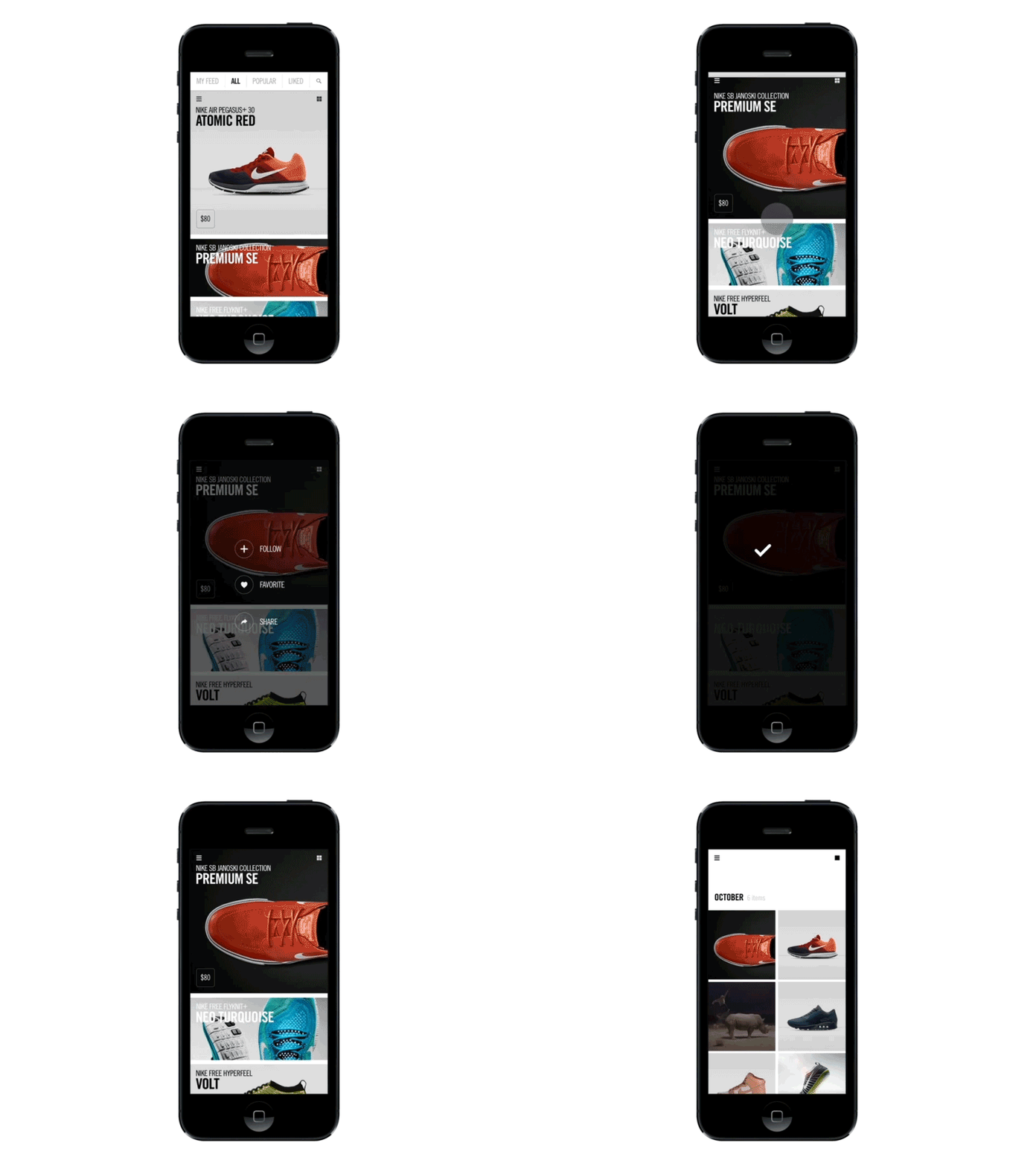
• Mobile Apps = Computer program or software application designed to run on a mobile device such as a phone, tablet, or watch.

Source: https://giphy.com/gifs/apps-Etyp0f9jwBYAw

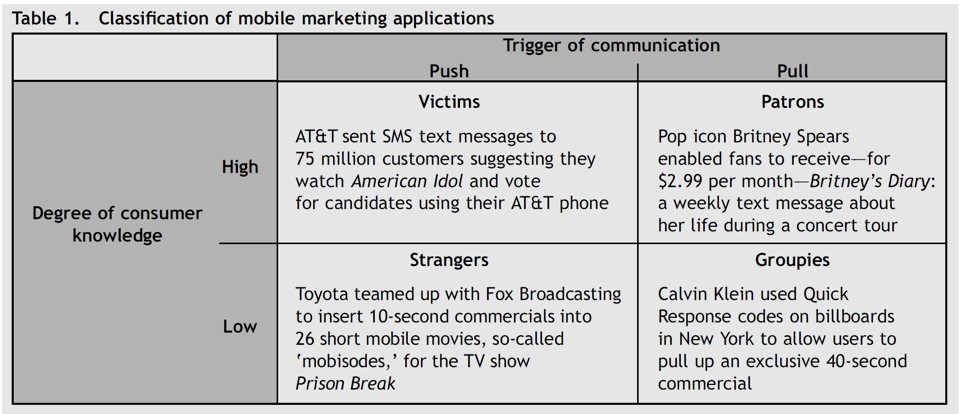
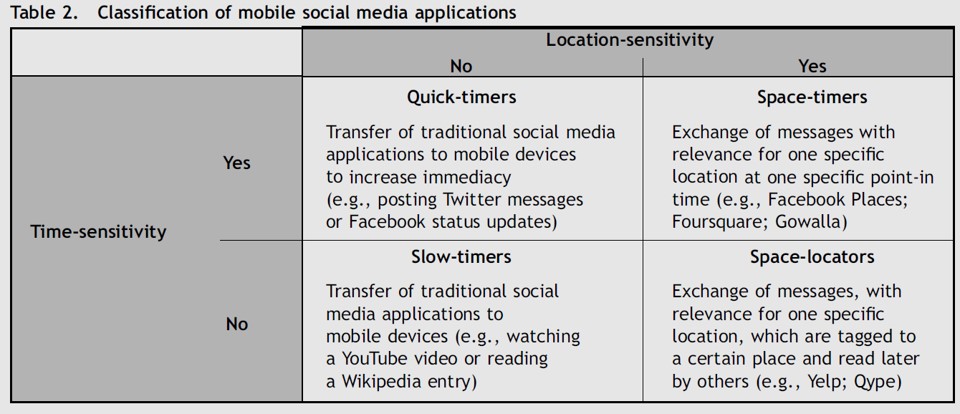
Classification of Mobile Marketing Applications: According to Andreas M, table below shows the classification of mobile marketing applications which marketers should look out for while coming up with strategies. It helps marketers to better identify the client group they want to reach out to effectively.

Kaplan, Andreas M. (2012). “If you love something, let it go mobile: Mobile marketing
and mobile social media 4×4. Business Horizons, Vol. 55(2), 129-139

Classification of Social Media Applications and Advice: Table below shows the classification of social media applications which helps marketers to better recognize social media application behavior of consumers. Marketers may make use of the table to strategize the way that they want their marketing information to be delivered.

Kaplan, Andreas M. (2012). “If you love something, let it go mobile: Mobile marketing
and mobile social media 4×4. Business Horizons, Vol. 55(2), 129-139

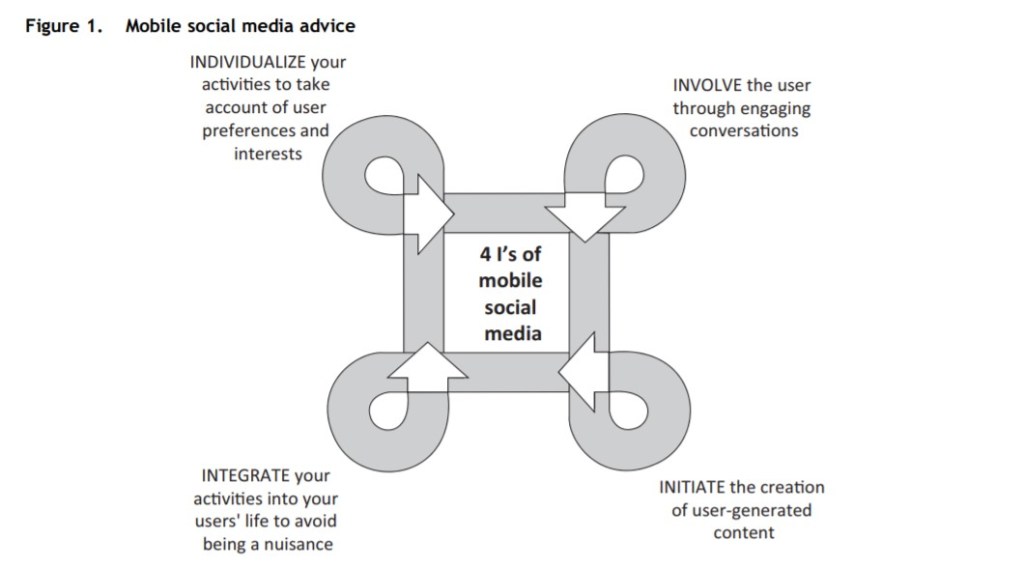
Another table here shows the brief summary of advice given by Andrea M for Mobile Social Media Marketing. It’s a great and foundational tool for marketers to build their strategies around for going mobile in Social Media Marketing.

Kaplan, Andreas M. (2012). “If you love something, let it go mobile: Mobile marketing
and mobile social media 4×4. Business Horizons, Vol. 55(2), 129-139

• Location Based Mobile Marketing = Direct marketing strategy that uses a mobile device’s location to alert the device’s owner about an offering from a near-by business.

Source: https://www.wikitude.com/blog-geo-ar-location-based-augmented-reality-use-cases-and-how-to/

• Mobile Payments = Payment services operated under financial regulation and performed from or via a mobile device. 

Source: https://giphy.com/gifs/apple-getting-customers-fAIld1ctrguXK

Final Thoughts

I hope the above information gives you better understanding about what Mobile Marketing is about and provided you with tools that help you in planning your marketing strategies.

In conclusion, marketing strategies going mobile is what every marketer should consider to venture because mobile device usage is domineering. Mobile is a very personal device, hence, content creators for marketing must remember to always make it personal and keep mobile format in mind. Many uses mobile apps to communicate, marketers can use it as an interactive platform to communicate faster and more effectively to consumers. After reading this post, how do you think Mobile Marketing has benefited you? I’d love to hear from you in the comments!

Social Media Marketing Strategies

As mentioned in the previous post, this post will talk about Social Media Marketing Strategy. Let’s start with understanding why people engage in social media? What’s their motivation?

Why Do People Engage in Social Media?

According to the Guosong Shao in his book “Understanding the Appeal of User‐Generated Media: A Uses and Gratification Perspective. Internet Research“, people use social media for the following: Consumption of information and entertainment, participation in social interaction and community development, and production of self‐expression and self‐actualization. In a simpler form:

  1. Information processing
  2. Entertainment Activities
  3. Social Connection

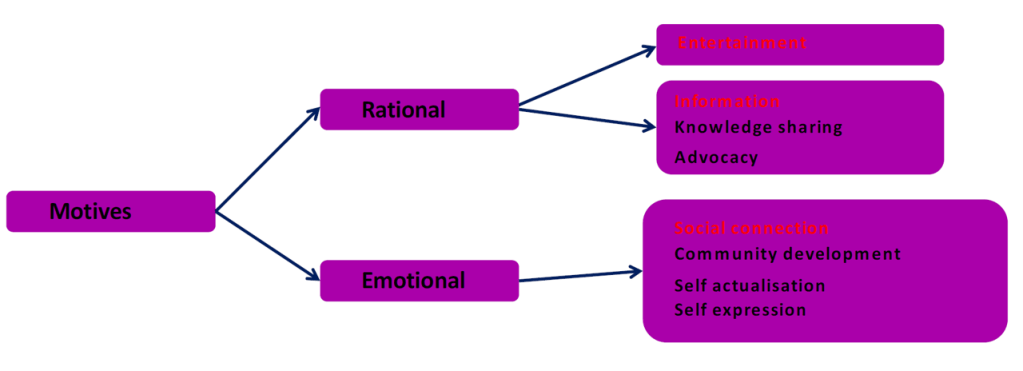
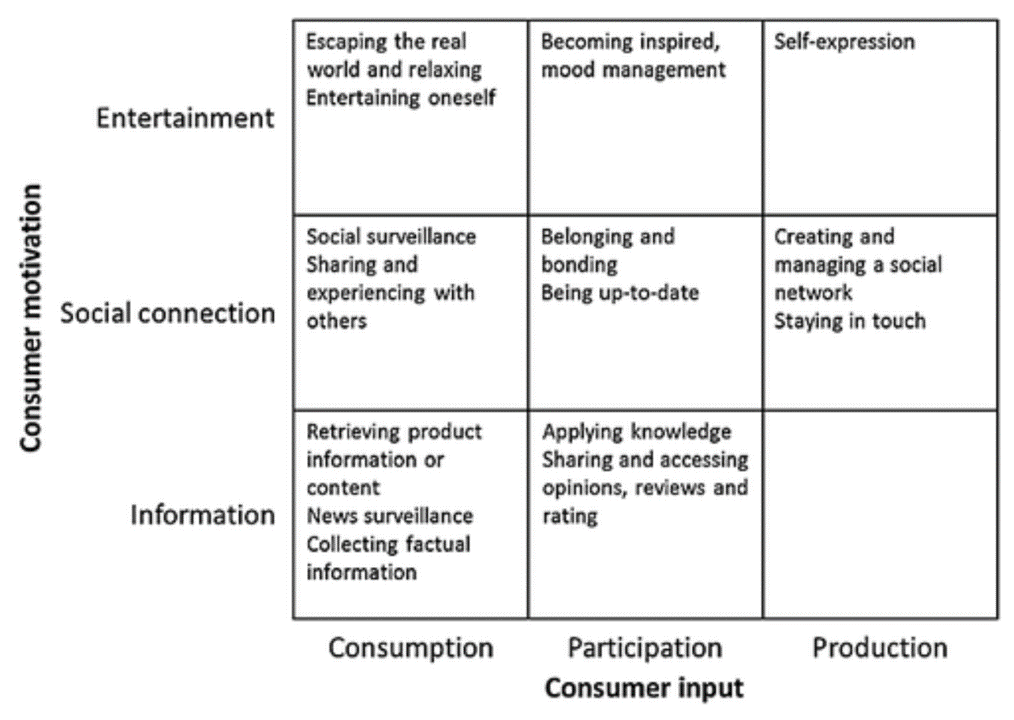
In an article, “Consumer activity in social media: Managerial approaches to consumers’
social media behavior” by Kristina Heinonen, it gives an even more detailed picture of Social Media Motivators and input behaviours in the conceptual model of consumers’ social media activities as below:

From the table above, we can see that under consumer of Social Media, people use it to also consume, participate and produce according to their their motivation. Hence, when it comes to the target audience we are gunning for via social media, we need to understand why they use it. Then we market our product to them. In this sense, marketing becomes relevant and more attractive to them. Hence, aligning your marketing strategy to this table is important as we want to make sure the advertisement will meet their motivation to be on Social Media.

Source: https://dribbble.com/shots/3648521-Split-Depth-Instagram-Marketing-for-Craft-Beer

Developing Strategies

Ever wondered how we should start developing marketing strategies? We have to first understand Customer Value.

Customer Value is the difference between the benefits the customer gains from owning and using a product and the costs of obtaining the product.

-Kotler, Brown, Adam, Burton, Armstrong (2007): Marketing 7e, Pearson Education Australia

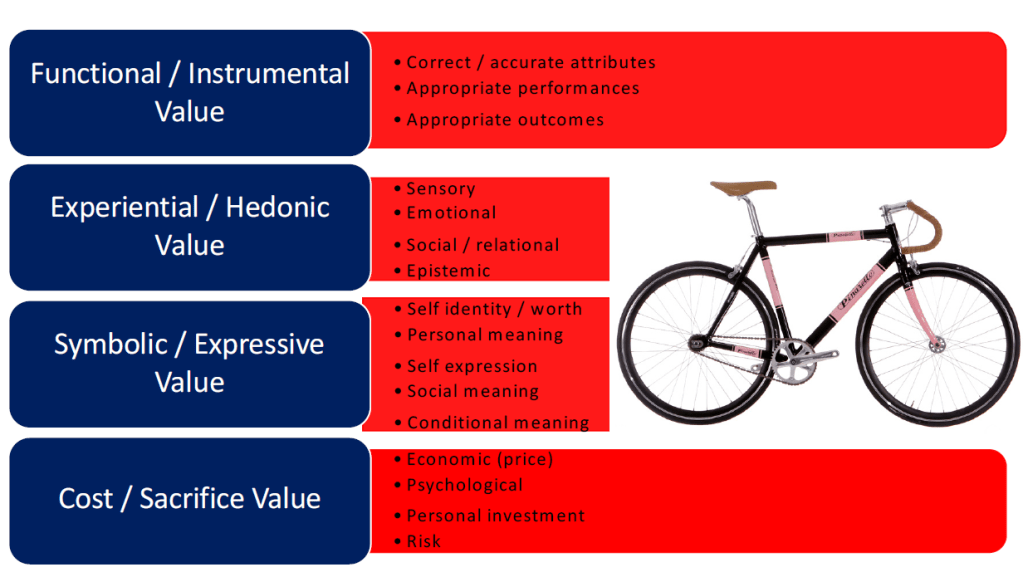
According to the book “Journal of Marketing Theory and Practice” by Smith and Colgate, Customer Value can be categorized as follows:

We want to make sure the marketing of our product presents certain values to our customers. It can be Functional, Experiential, Symbolic or Cost Value. Hence, doing research on customer’s demographic before determining the target group is very important. Especially through Social Media, advertisements can be easily ignored. Therefore marketing has to become even more specific, personalized and targeted to reach out more effectively.

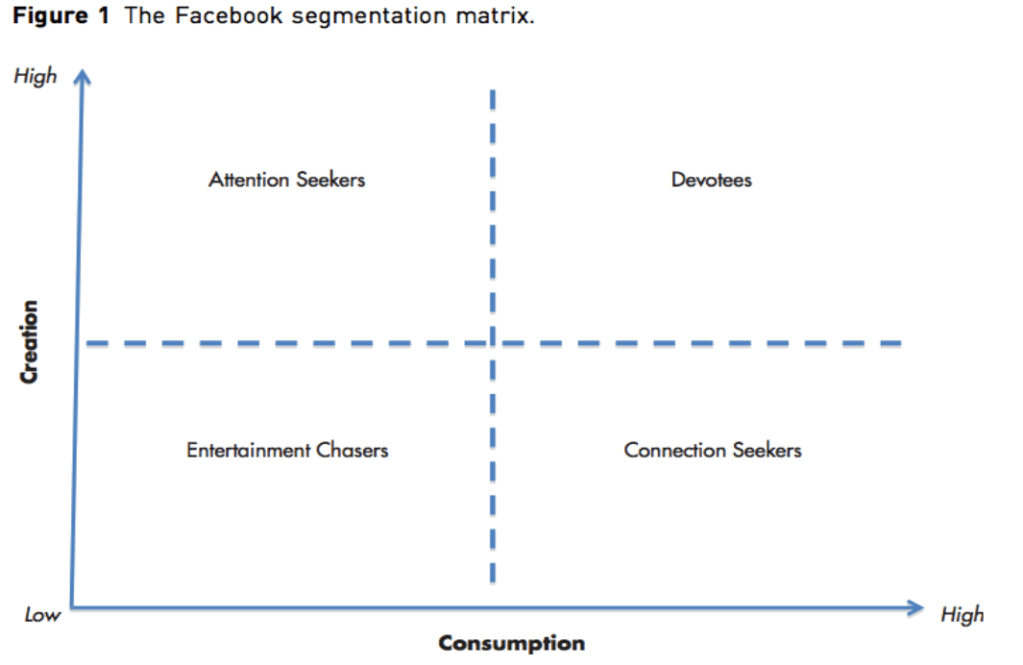
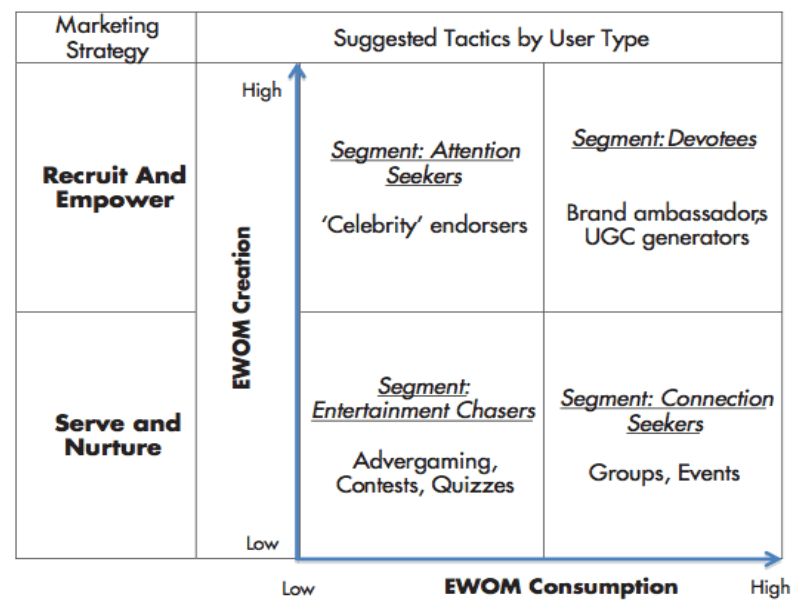
With this, we can look at the targeted marketing strategies by Facebook segment by Monica Alexandra Hodis in her artical called “Journal of Marketing Management”:

The table serves as a useful tool for digital marketers to allocate their audience Social Media user types and plan their marketing strategies accordingly. When looking at this table, marketers have to think “What is my user looking for in their social media? Are they trying to consume or create? Where do they stand in the table?”

Many of us find Facebook Advertisements annoying, but there are some that would catch my attention, especially those that stir my emotions and empathy. There was one that showed a family that was tightly knit but suddenly the father passed on and it was an insurance advertisement. Why did that advertisement catch my attention? Personally, I use Social Media for entertainment and connection, and I felt connected to that advertisement content. That advertisement alone gave me an experiential and symbolic value.

10 Simple Social Media Marketing Strategy Steps

  1. Set up a digital networking platform for planning
  2. Establish a social media budget
  3. Establish marketing goal (Raise awareness or Sales etc?)
  4. Research and discuss on the target customer group
  5. Learn about competitors
  6. Conduct Social Media Audit
  7. Decide on the kind of value to provide for target customer group (personalized marketing)
  8. Come out with content/story/theme and brainstorm ideas for marketing methods
  9. Decide on your marketing methods and Social Media platforms to use
  10. Set up Social Media Account and Use Brand Advocates

Final Thoughts

Social Media Marketing has become more and more content focused and personalised. It is important that marketers start to look into their customer’s Social Media behaviour, motivation and values to effectively bring value to the customer. After reading this post, do you think there are better strategies to improve Social Media Marketing? I’d love to hear from you in the comments!

ABCs of Social Media Marketing

As a Millennial and a student majoring in Accountancy, I would never think about what Social Media was about. We just use it, right?

While Digital Marketing has many marketing activities, Social Media Marketing is one of the most effective ones available today. In this post, I am going to expound on Social Media, their types and purposes. I hope that this post will help you to build a foundation about understanding Social Media, before talking about Social Media Marketing Strategy in the next post.

What is Social Media?

According to the book “Education on Digital Cultural and Social Media” by Dr. S. Saileela and Dr. S. Kalaivani, Some common features of Social Media are:

  1. Interactive Web 2.0 Internet-based applications.
  2. User-generated content (text posts or comments, digital photos or videos, and data generated through all online interactions).
  3. Users create service – Specific profiles and identities for the website or app that are designed and maintained by the social media organization.
  4. They facilitate the development of online social networks by connecting a user’s profile with those of other individuals or groups.

SOCIAL MEDIA

Definition: Social media is interactive computer-mediated technologies that facilitate the creation or sharing of information, ideas, career interests and other forms of expression via virtual communities and networks. 

—  Dr. S. Saileela and Dr. S. Kalaivani, 2019

Social media is therefore not limited to social networks like Facebook, SnapChat and Instagram, but includes the following:

  1. Blogs & Micro blogs
  2. Collaborative projects
  3. Enterprise social networks
  4. Forums
  5. Photo sharing
  6. Product/services review
  7. Social bookmarking & Social gaming
  8. Video sharing
  9. Virtual worlds

In short, Social Media are web-based sites that serve as a platform allowing interaction between people. With this, we can look at the Types of Social Media Platforms:

Social Media Platforms

1. Wikis – editable websites
• Collaboration (Assume all people are good/equal)
2. Blogs (“web log”) – website with entries made
and displayed in reverse chronological order

• Text, images, links, media
• Interactive comments
3. Microblogs – e.g. Twitter
4. Social software – collaborative applications
• An online community for connections and collaboration
• Instant messaging (Facebook, YouTube, WhatsApp, virtual worlds)

Classification of Social Media Platforms

Let’s go further to classify Social Media Platforms and understand each of their purposes.

(i) According to their Purpose

Community:
– Channels of social media focused on relationship
building and maintenance of relationship among people sharing common interests / identity
– Vehicles include social networking sites, message boards and forums

Publishing:
– Channels focused on dissemination of content
– Vehicles include blogs, microblogging sites, media sharing sites, wikis etc.

Commerce:
– Channels of social media focused on facilitating commercial transactions
– Vehicles include review & rating sites, deal sharing sites etc.

Entertainment:
– Channels focused on entertainment
– Vehicles include gaming sites, virtual worlds and entertainment communities

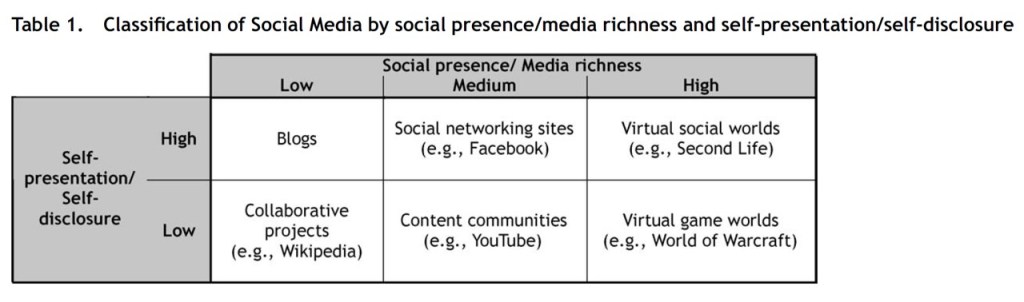
(ii) According to their Social Presence and Self-disclosure

Source: https://blog.flixel.com/best-5-apps-make-beautiful-cinemagraphs-android-ios/

Impact of Social Media

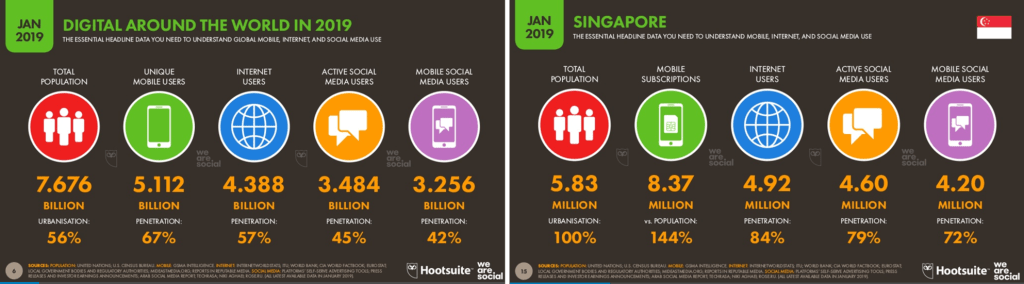
Ever wondered how impactful and effective Social Media is? These statistics are the ones Singapore Digital Marketers should look out for to decide which is the best site they should post their advertisements or campaigns online.

Source: https://datareportal.com/reports/digital-2019-singapore

According to We Are Social and Hootsuite’s Digital in 2019 Singapore report, in Singapore alone, there are 4.6 million active social media users, out of which, 4.2 million use Social Media through their mobile phones. The reach to market has increased. What kind of apps are more popular in Singapore? Let’s take a look below!

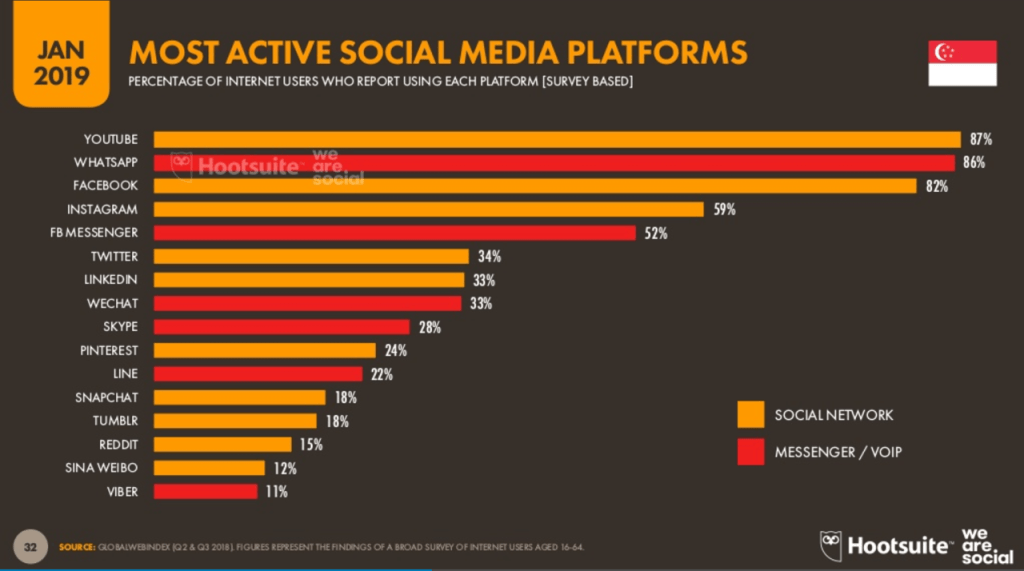
Source: https://datareportal.com/reports/digital-2019-singapore

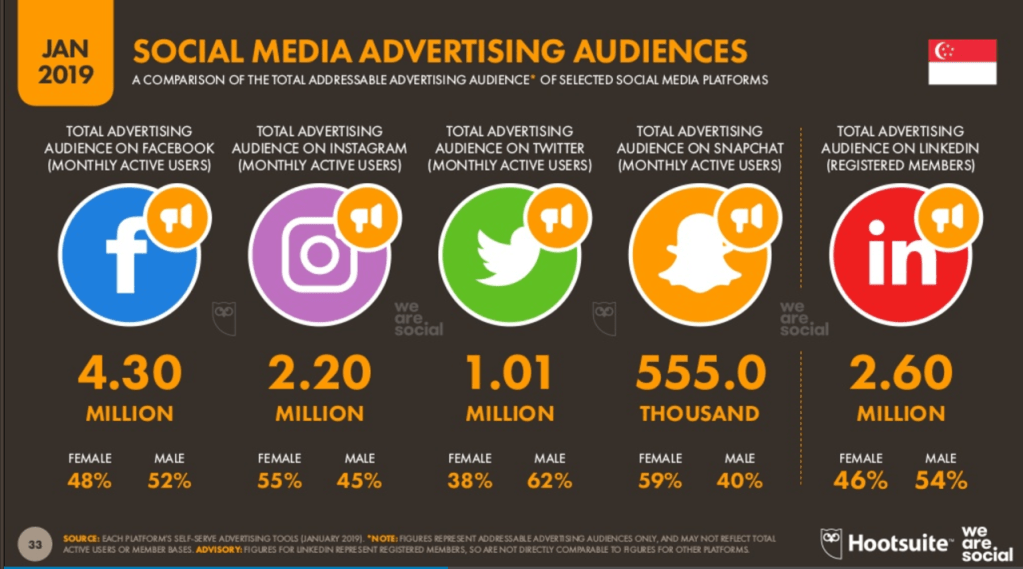
YouTube, WhatsApp, Facebook and Instagram topped the list to have the most active users. While Facebook, Instagram, Twitter has more than 1 million active audience for Social Media Advertising.

Tips for Social Media Marketing

According to Kaplan & Haenlein (2019), Social Media decisions is broken down into 2 points. Media and Social. Here are some tips when using Social Media for marketing. For the Media aspect, users have to:

  1. Choose carefully
  2. Pick the application, or make your own
  3. Ensure activity alignment
  4. Media plan integration
  5. Access for all

For Social aspects, users have to:

  1. Be active – take the lead, create relationships
  2. Be interesting – listen, and enable others to contribute
  3. Be humble – learn how to use the platform
  4. Be unprofessional – be personal and fun
  5. Be honest – e.g. wikipedia ≠ advertising

Final Thoughts

Given the accessibility of internet today, Social Media becomes extremely accessible. Understanding Social Media and users’ intention on using various apps gives Digital Marketers an upper hand to market appropriately and effectively.

For example, Facebook users are looking for community connection and medium self-disclosure. This provides Digital Marketers with information on how to connect with the users and what kind of advertisements to post (in this case, an advertisement that makes users feel connected).

As users of Social Media and Digital Marketer, I want to encourage you to use the above information and statistics to think about this: In what ways do you think marketing can be improved by using Social Media. I’d love to hear from you in the comments!

Design a site like this with WordPress.com
Get started